
Open-ended play
Open-ended play
Open-ended play for little minds with big ideas.
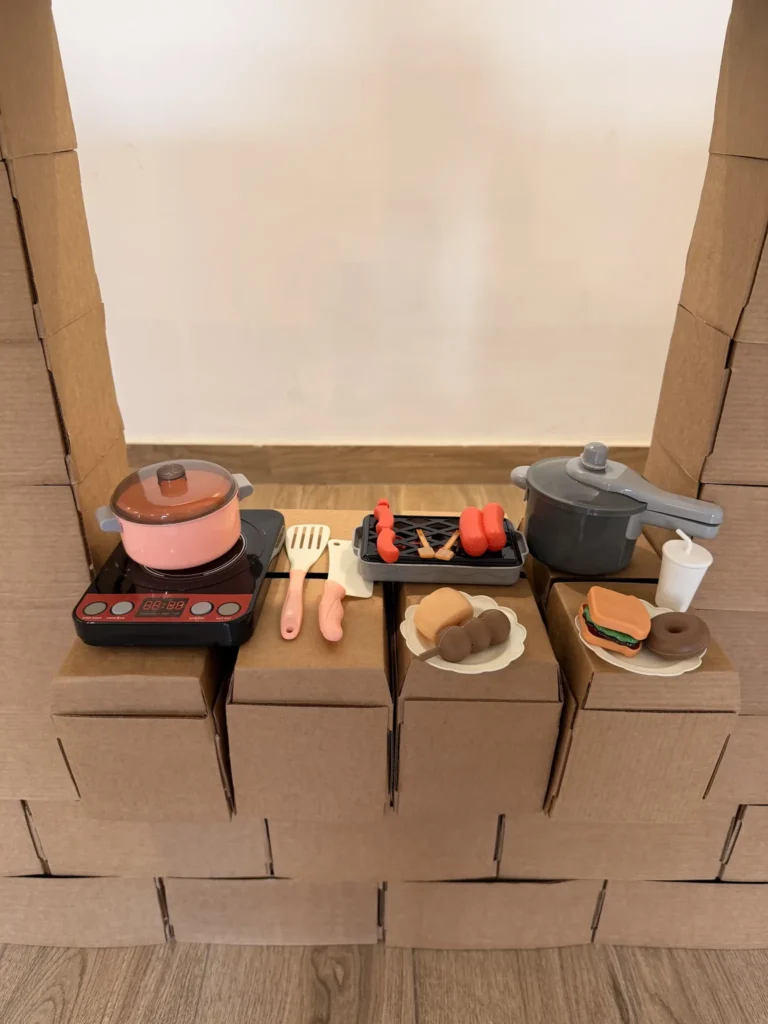
No instructions
The same blocks, three afternoons
One box. A castle on Saturday, a sofa on Sunday, a rocket the week after. Nothing to follow and nothing to finish, so the box never runs out of ideas.
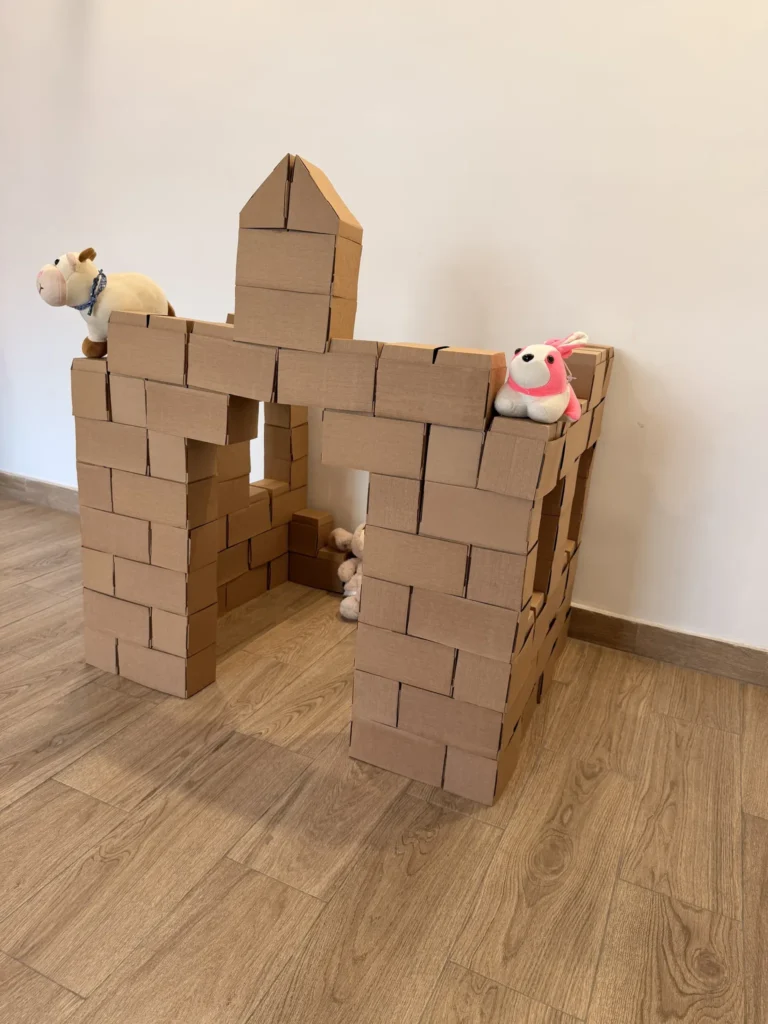 CastleMore than 60 pieces
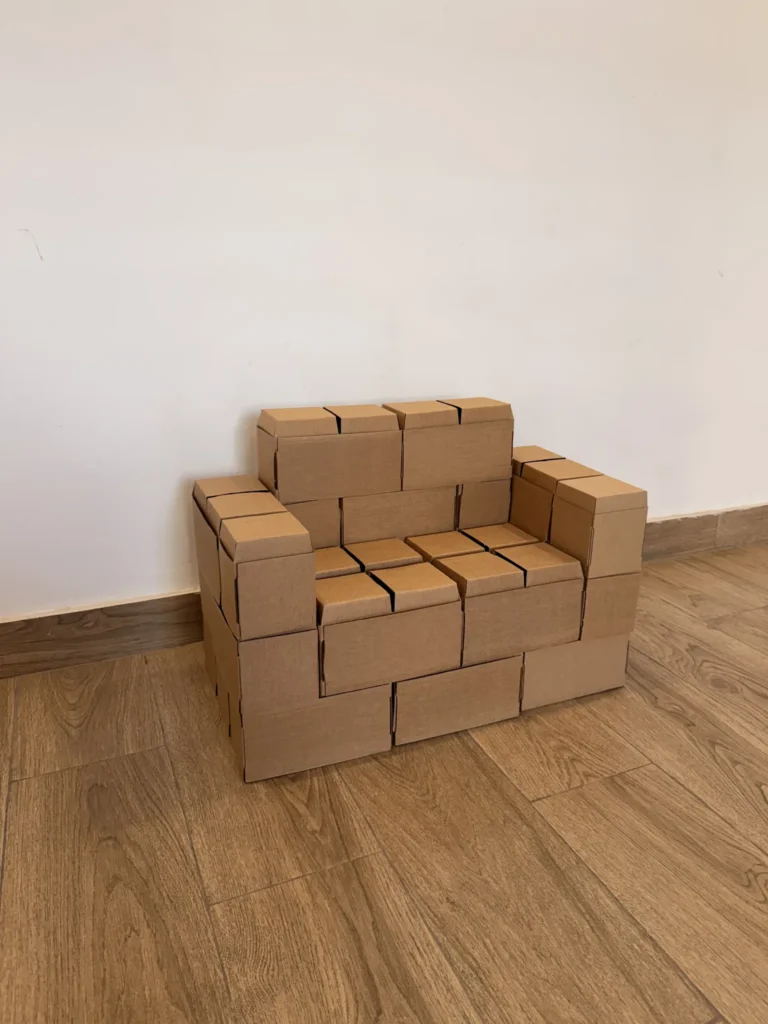 SofaExplorer 30
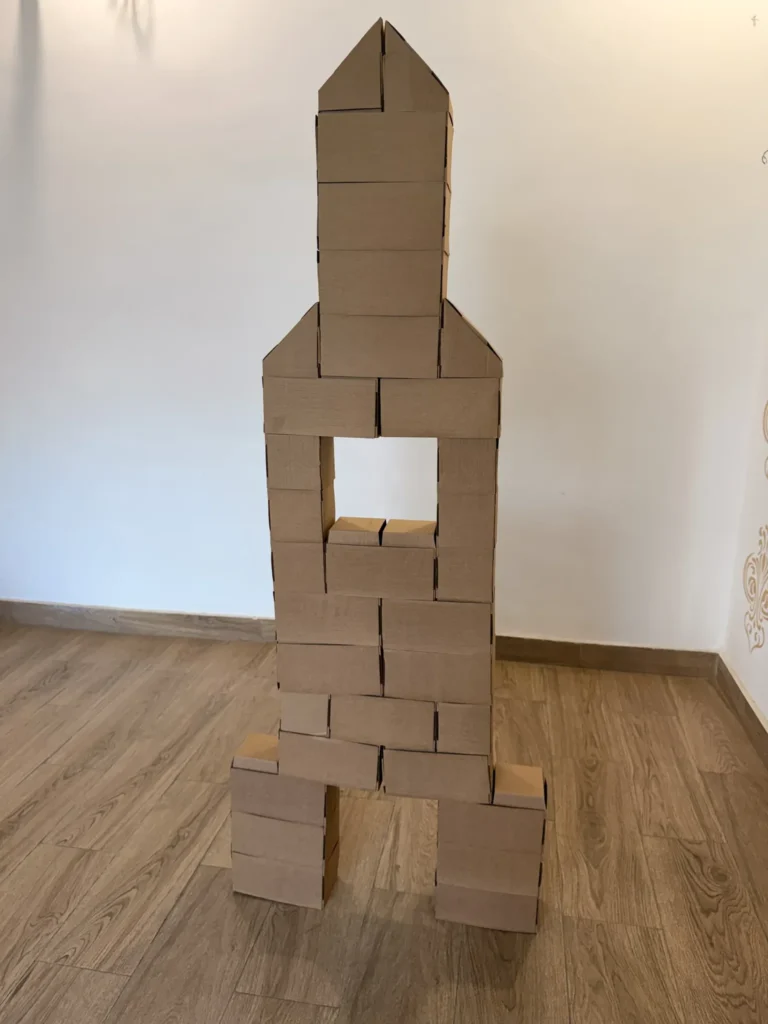 RocketBuilder 60
The pieces
Three shapes, every build
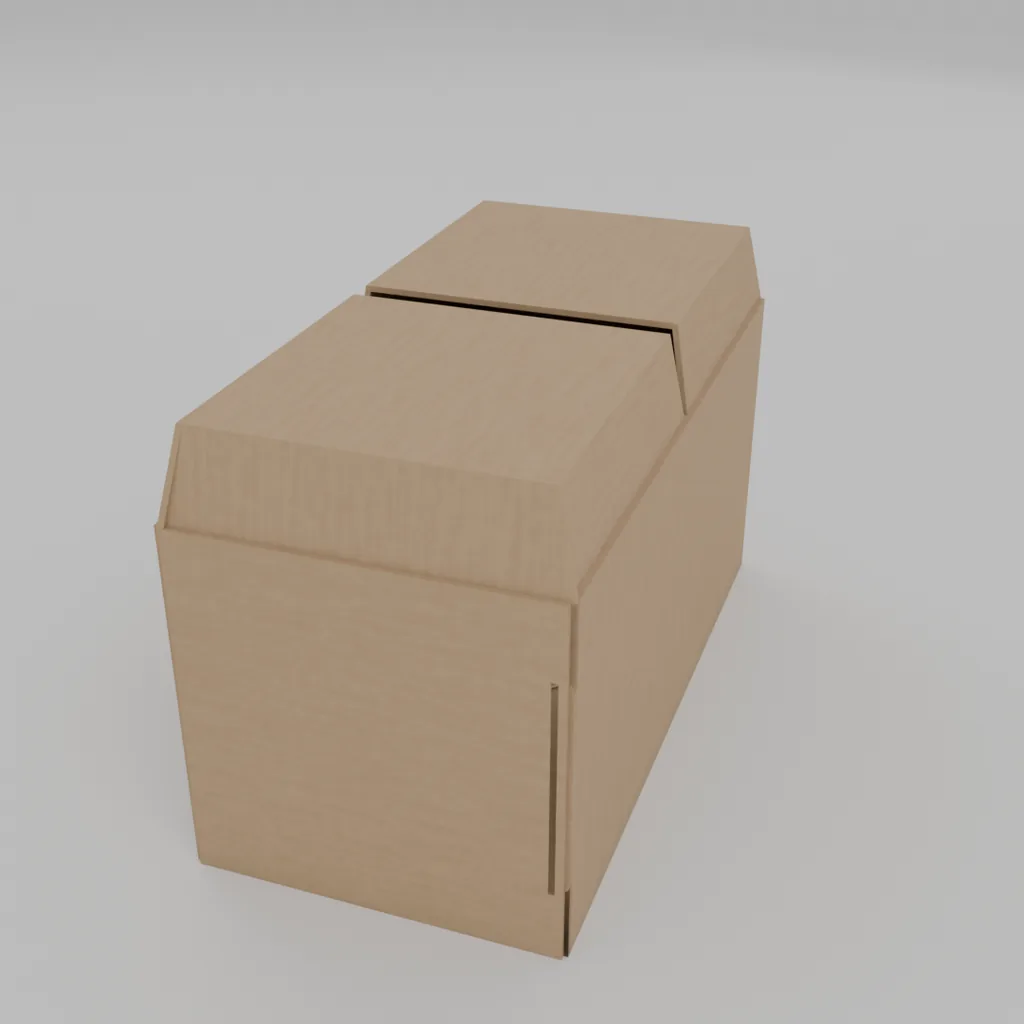
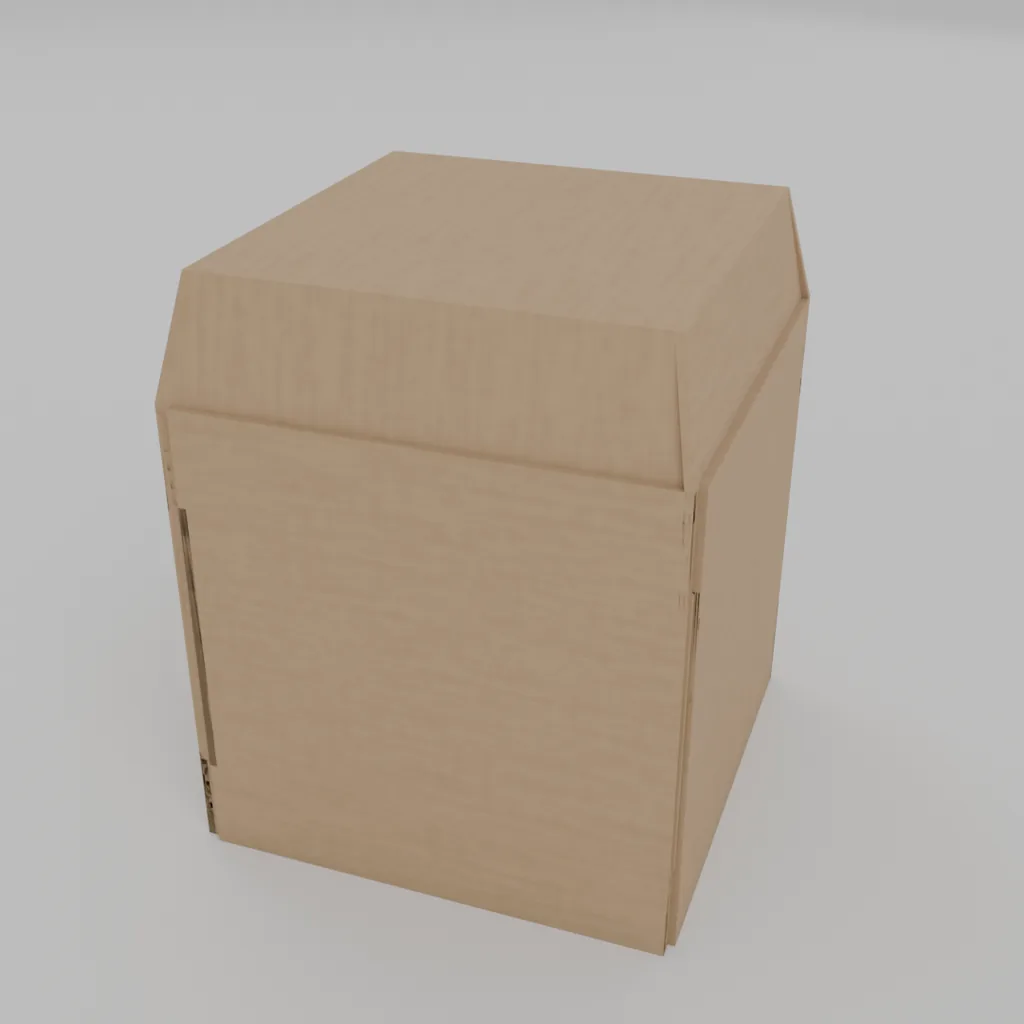
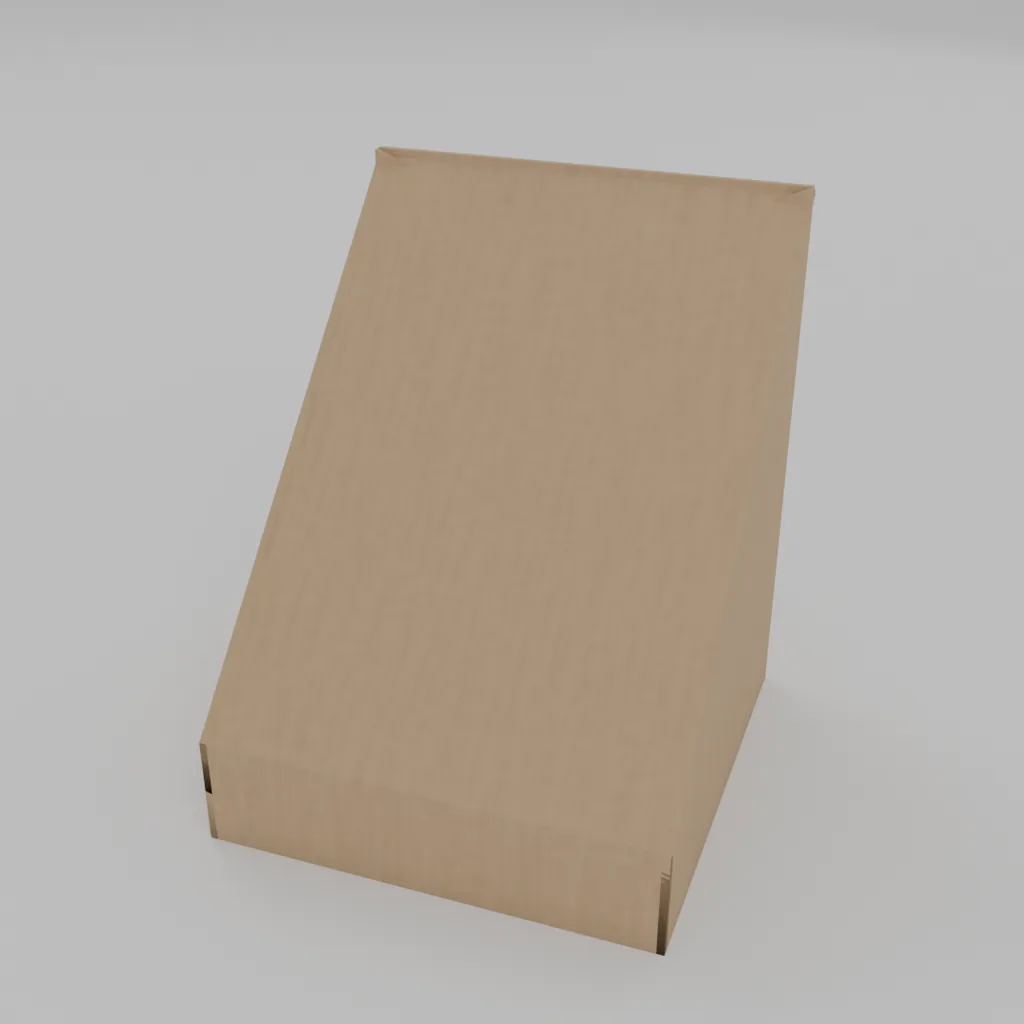
Double blocks, single blocks and triangles. Each one folds from a single sheet of corrugated board. Sizes are length × width × height, folded.
No glue
From flat sheet to block
Each block arrives flat and folds up: the sides rise, each flap wraps round the next wall and its tab tucks through. Nothing to glue.
Build longer
Blocks join end to end
A slotted junction plate drops in at the front and back of each seam, so two blocks become one long one. Walls get longer, towers get taller, and it all comes apart again.
Open-ended play
There are no instructions for imagination.
- Build it.
- Play in it.
- Play with it.
- Knock it down.
- Imagine again.
Learning through play
The loop children fall into
Watch them cycle through it without being asked.

- Imagine
- Plan
- Build
- Test
- Rebuild
Creative thinking
Deciding what to make, then changing their mind halfway. That's the good part.
Spatial reasoning
Working out what stands up and what falls over, with their hands, not a worksheet.
Collaboration
Big builds are easier with a sibling or a friend. So they learn to share the plan as well as the blocks.