
How it works
The blocks
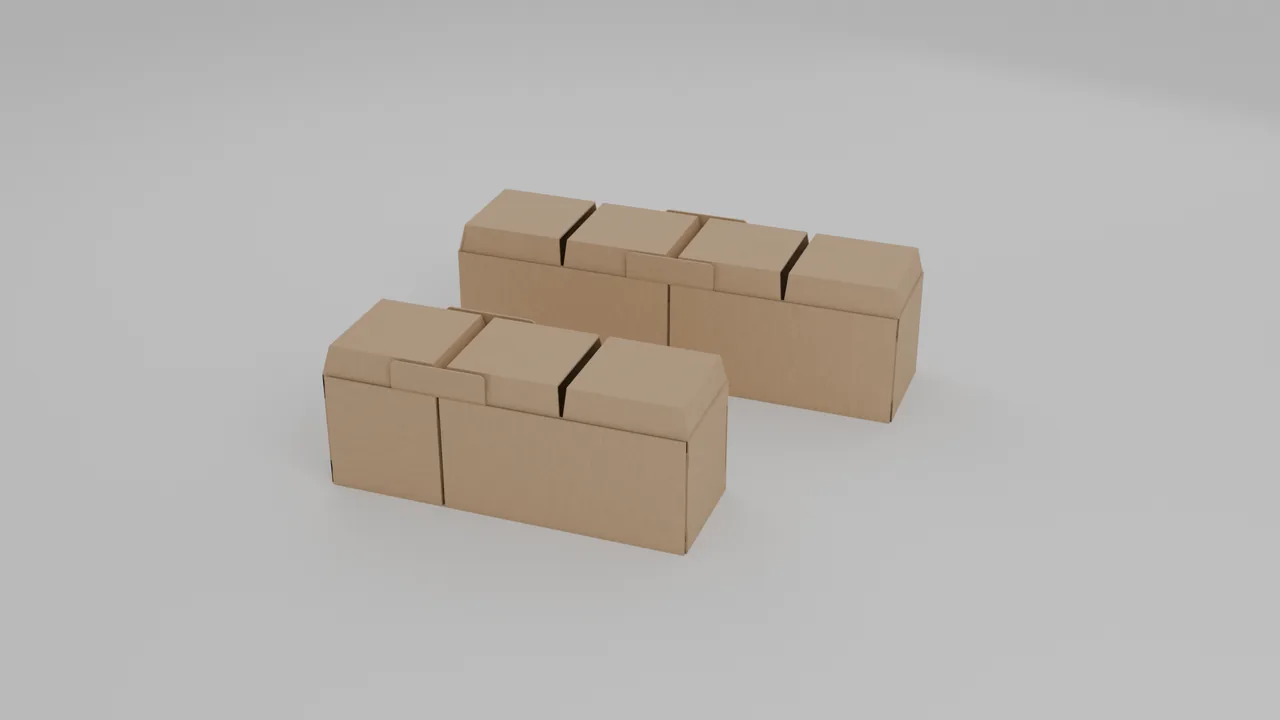
Three shapes and one junction plate, each cut from a single sheet of corrugated board. The blocks arrive flat; this page shows how they fold, how they join and how to put them together.
The pieces
Three shapes, one plate
Double blocks make the walls, single blocks fill the gaps and turn the corners, triangles make roofs, noses and fins. The junction plate joins two blocks end to end. Sizes are length × width × height, folded.
No glue
How each block folds
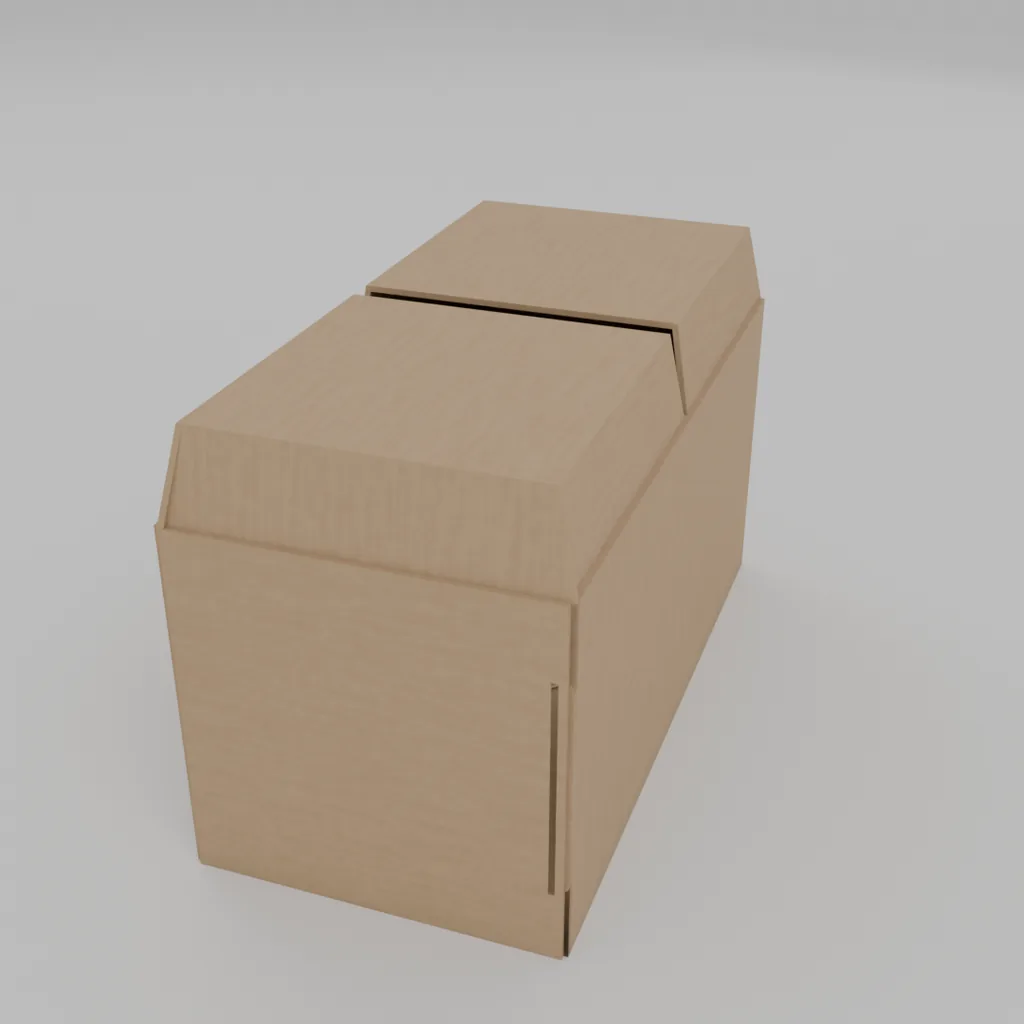
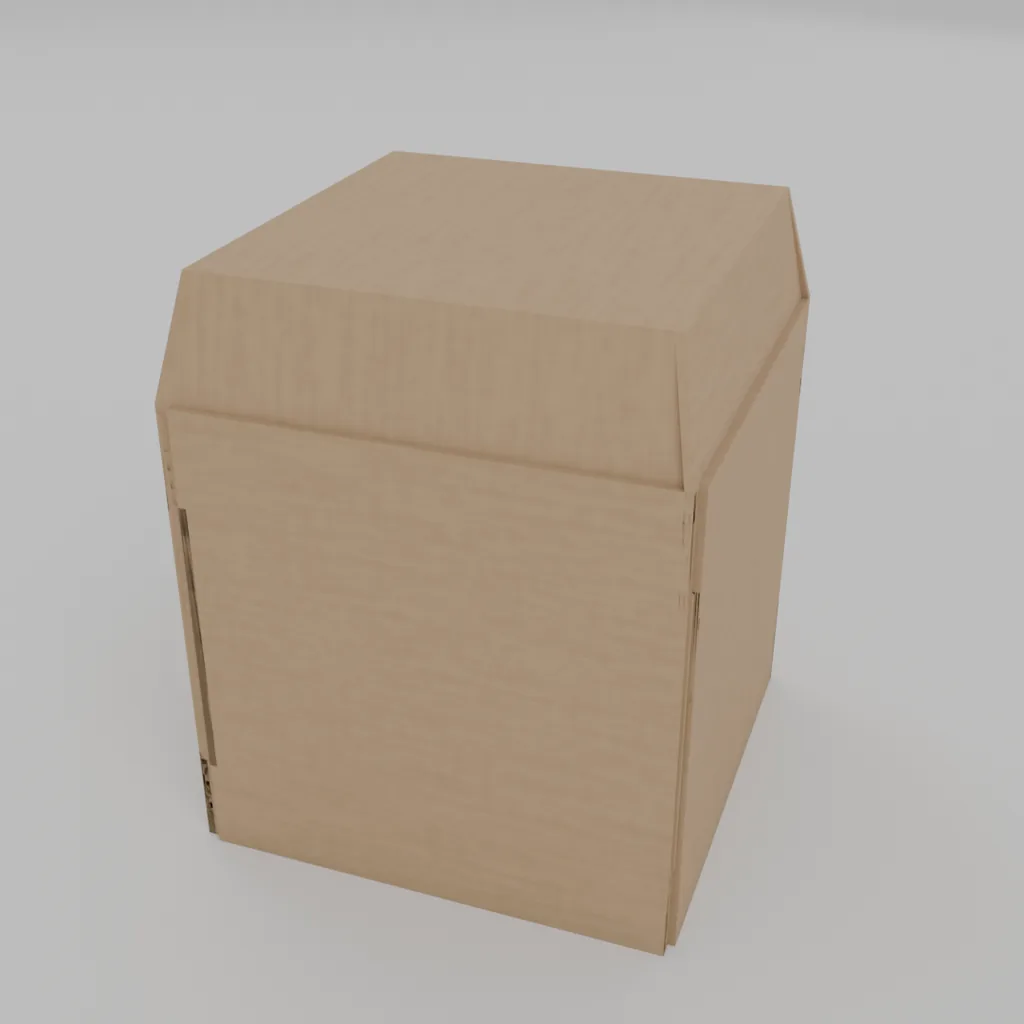
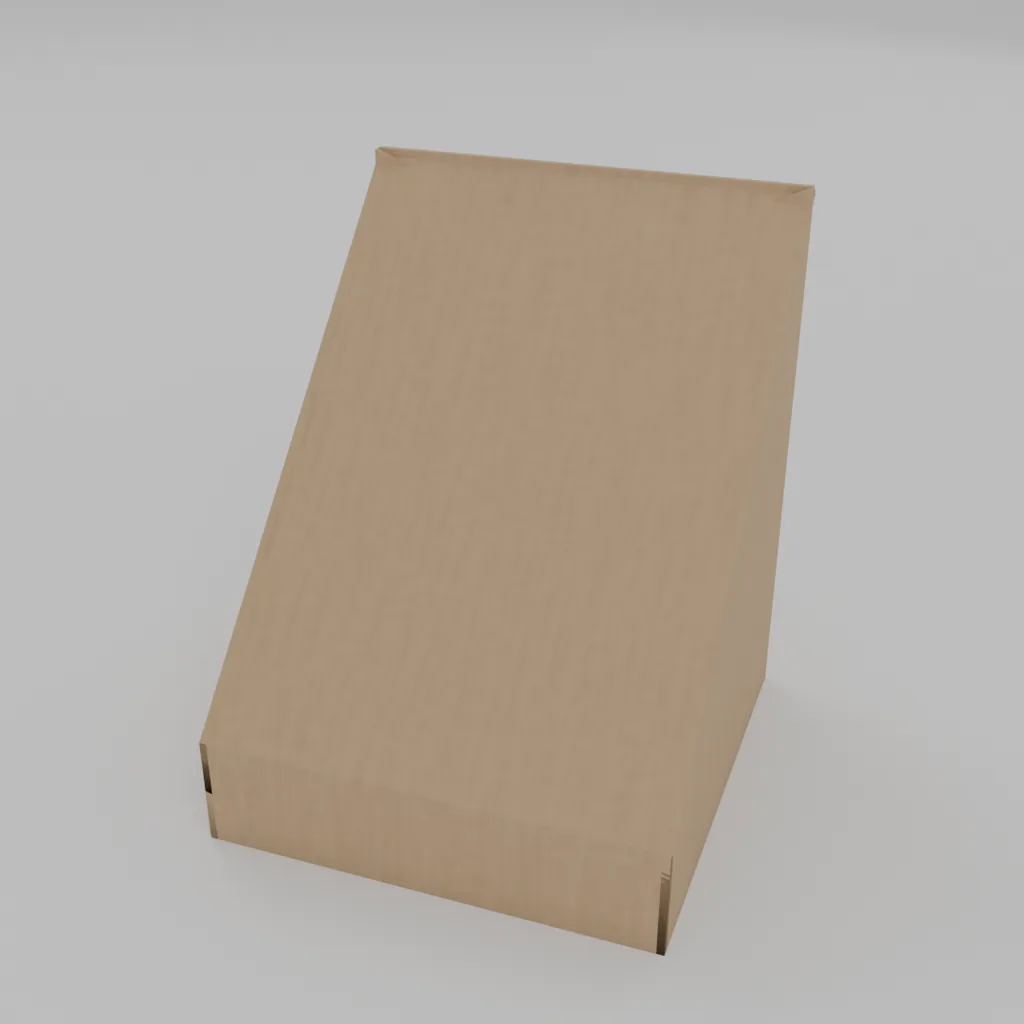
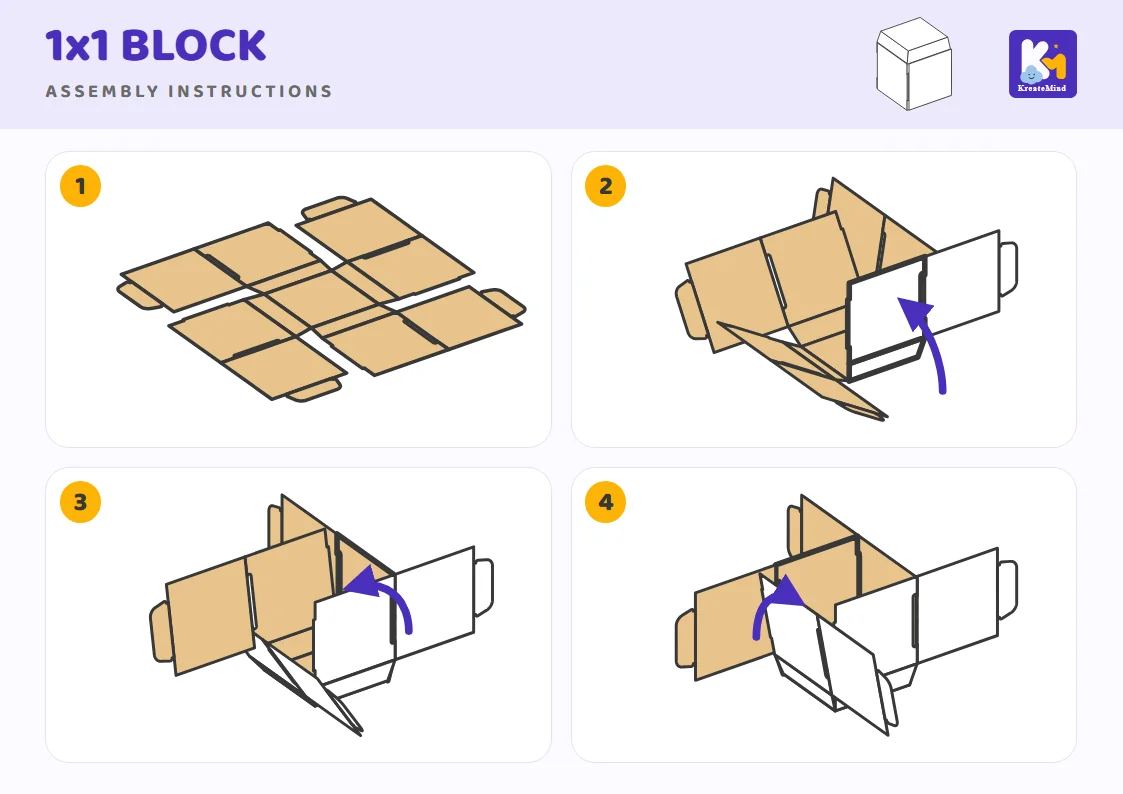
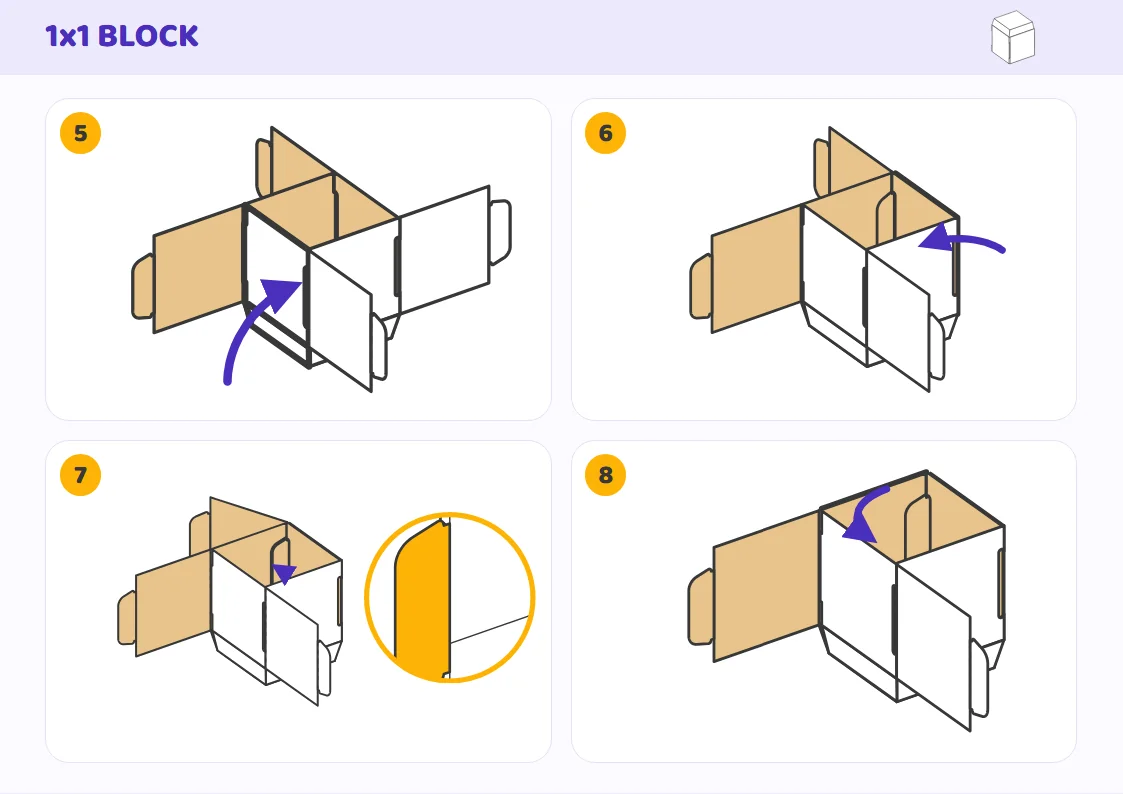
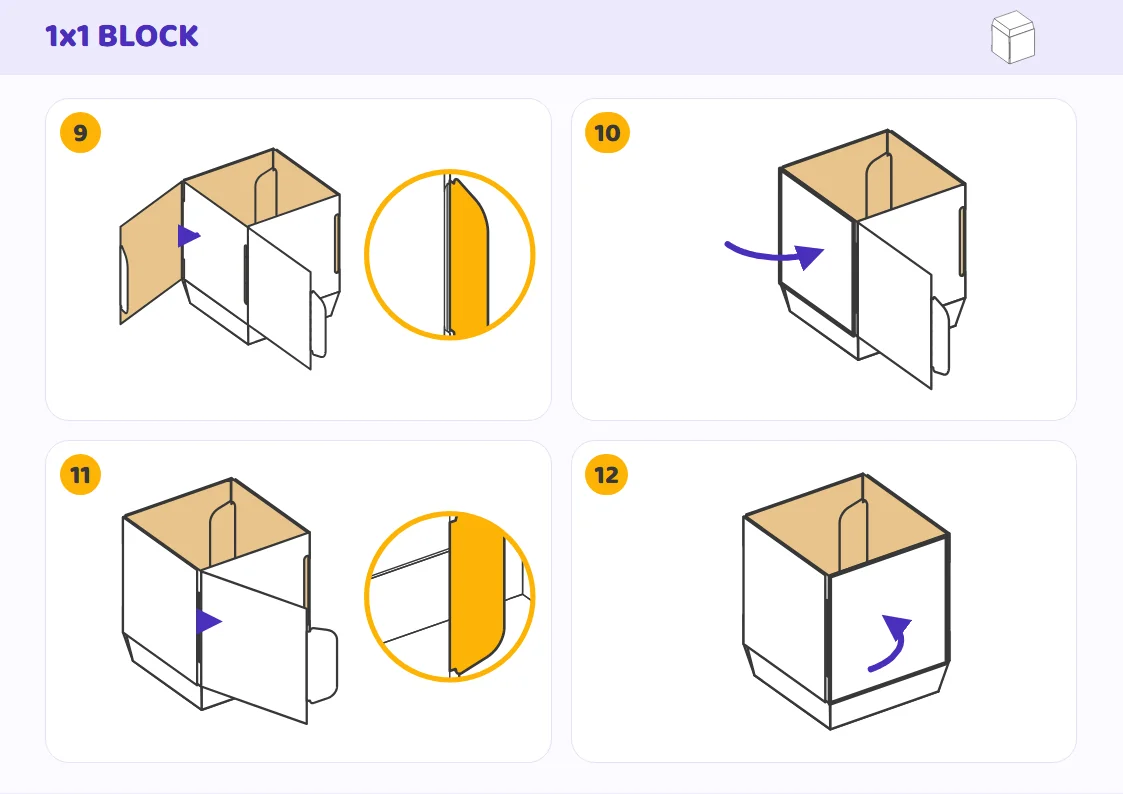
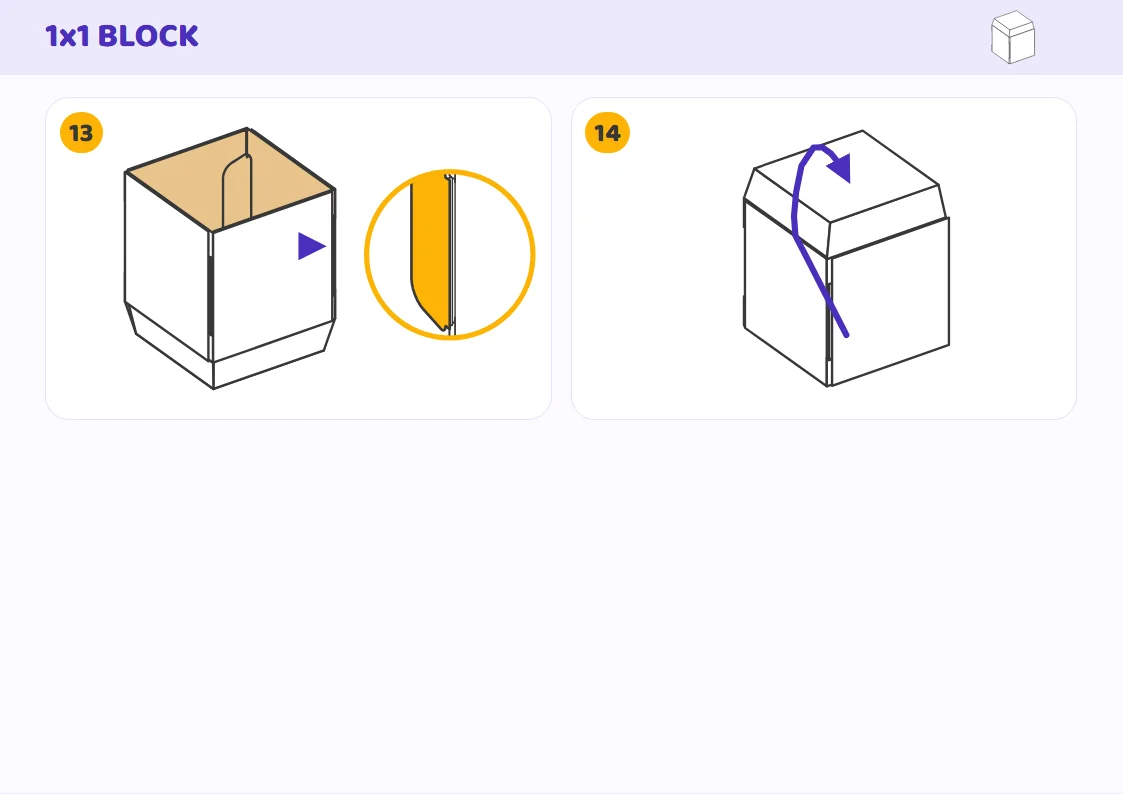
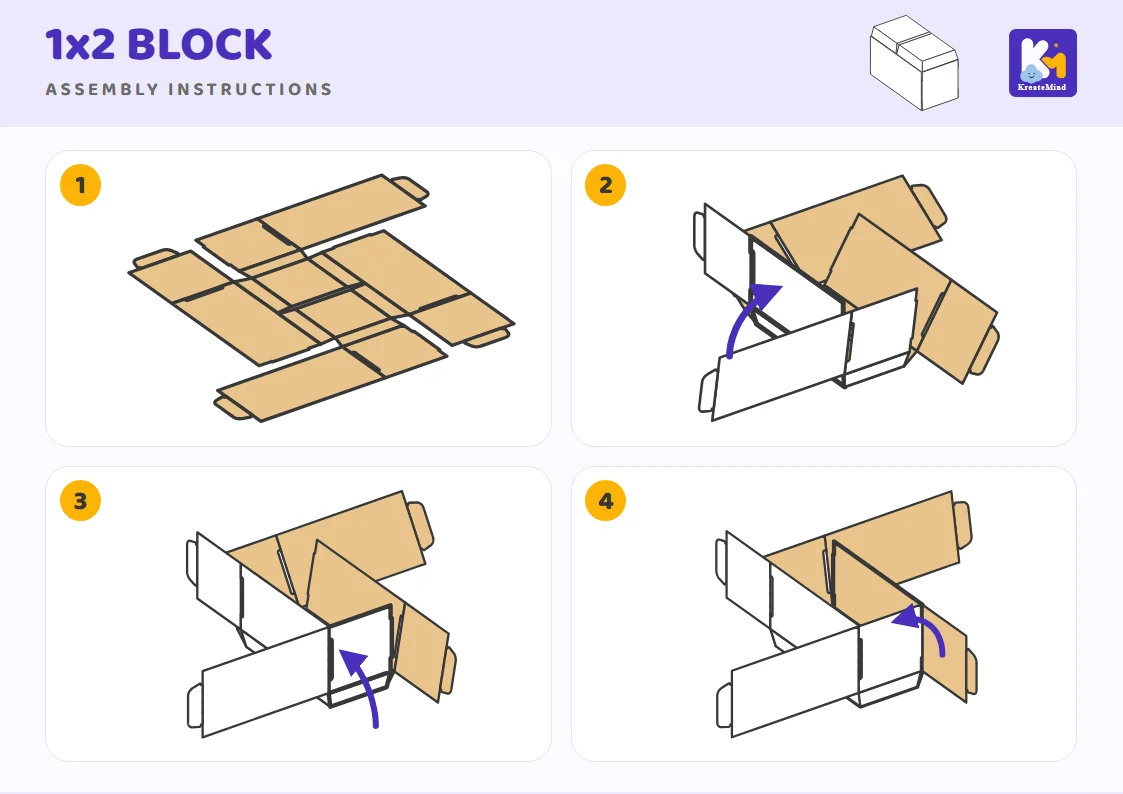
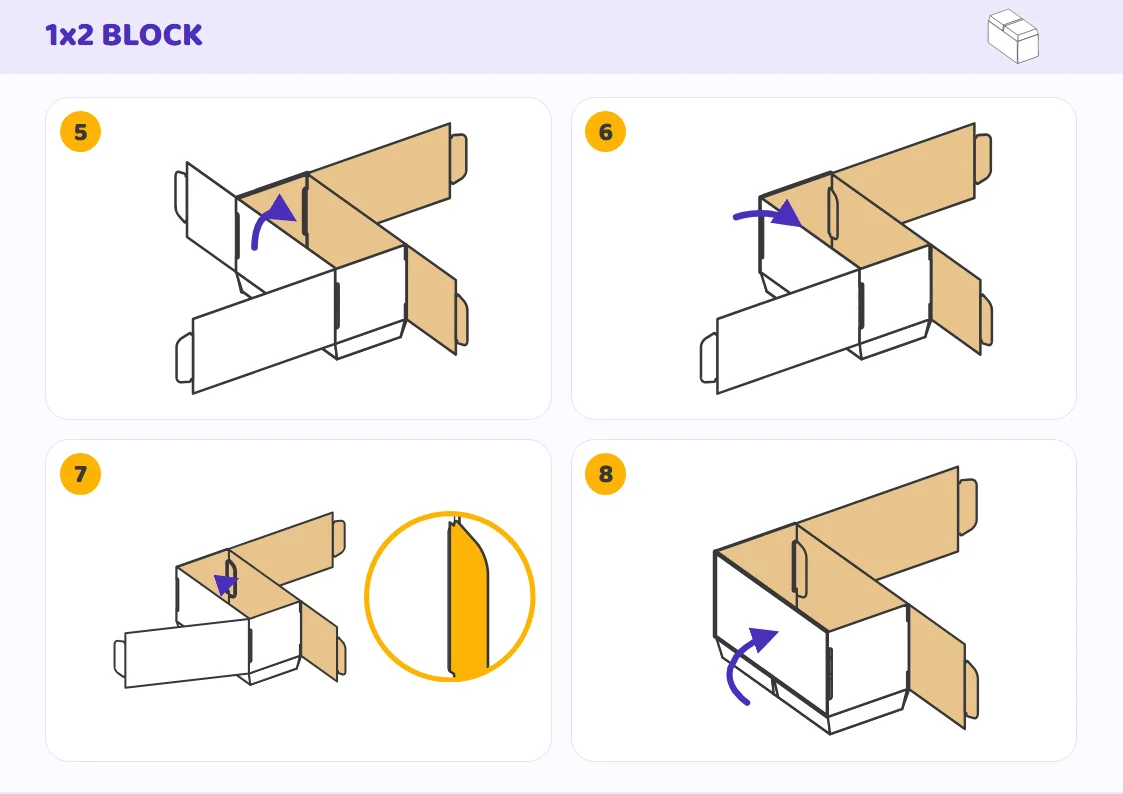
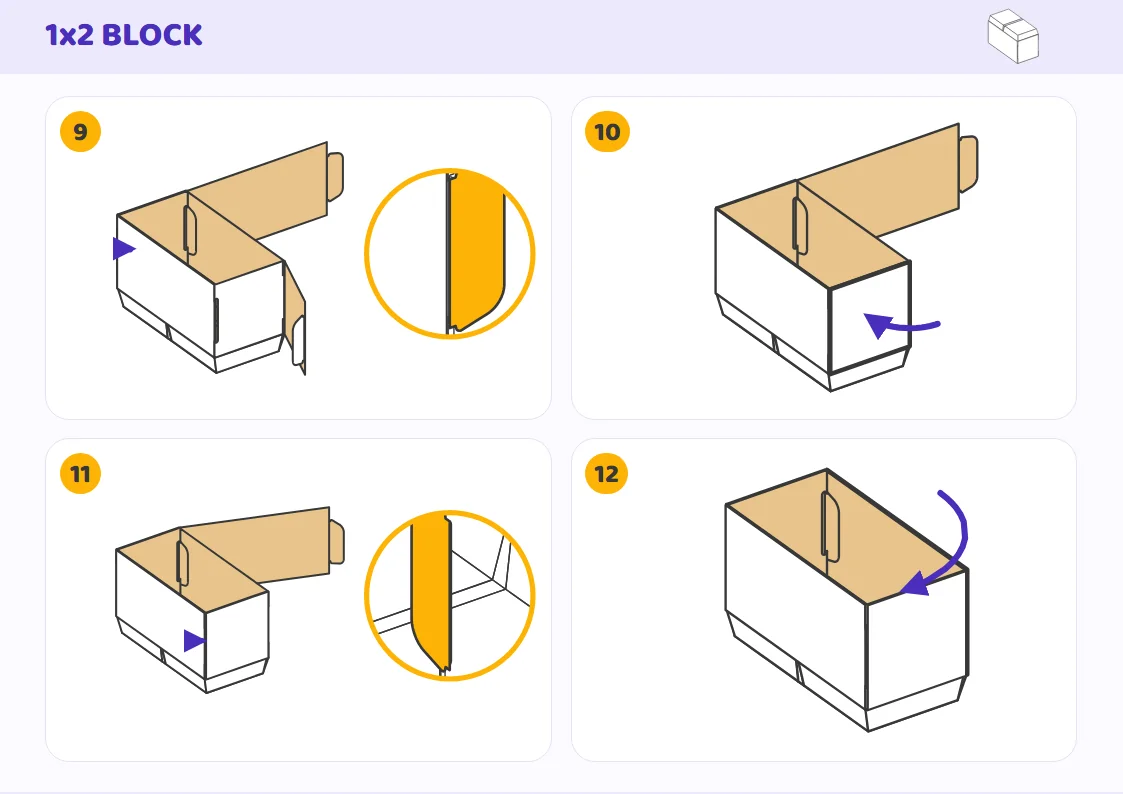
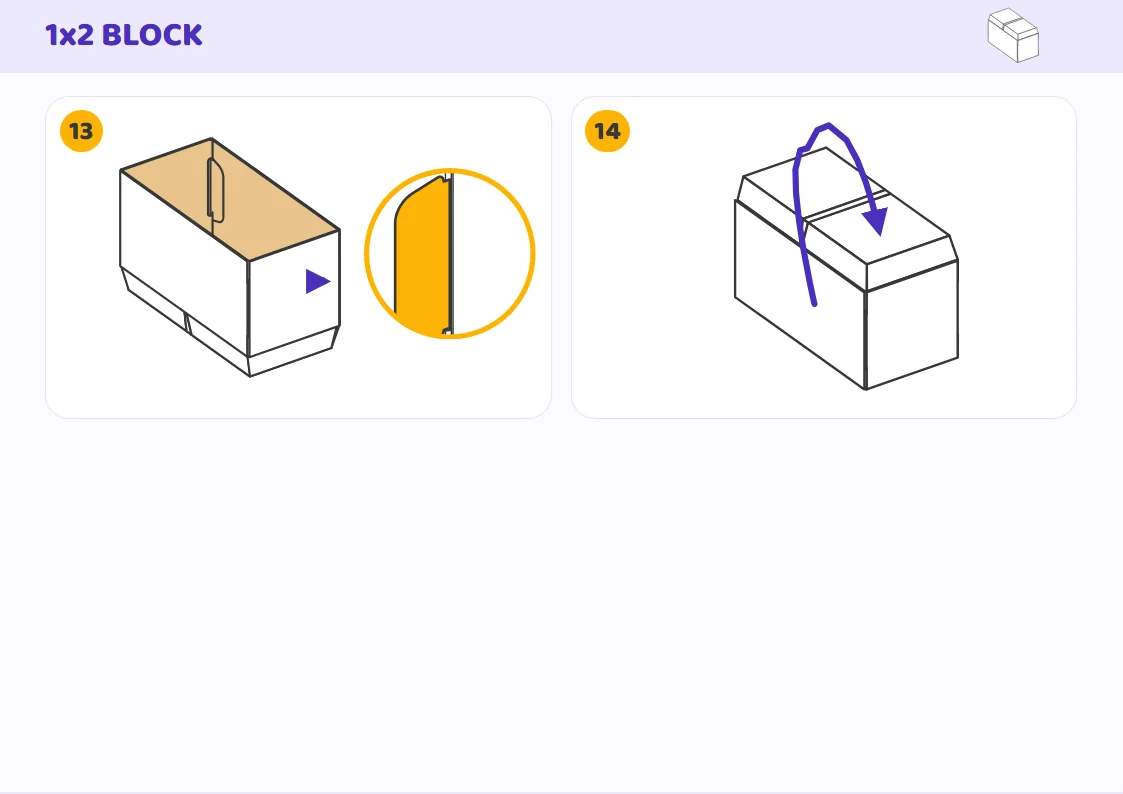
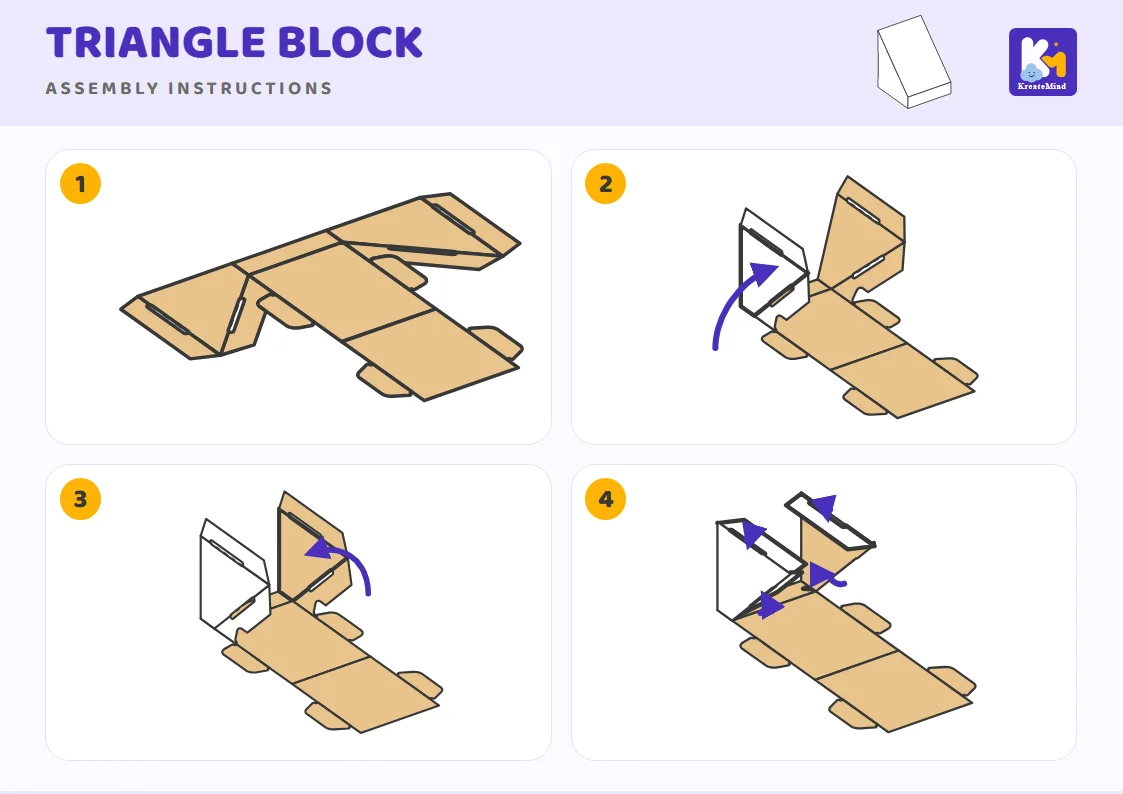
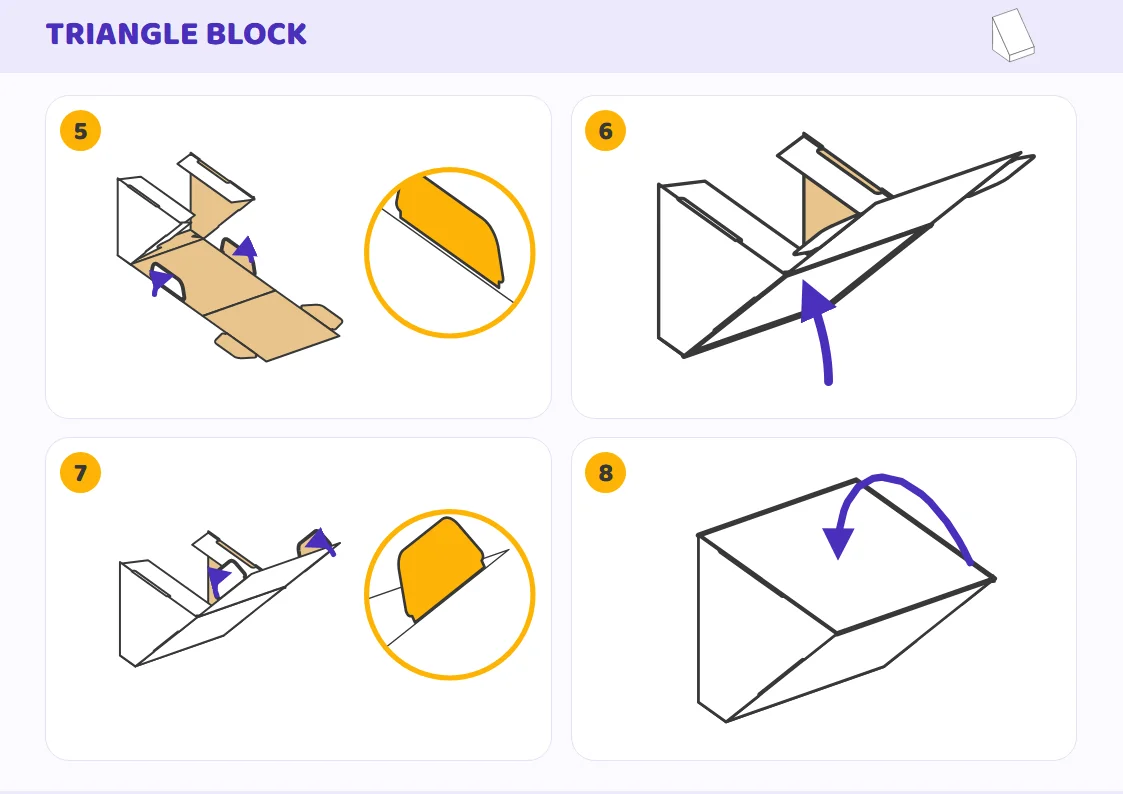
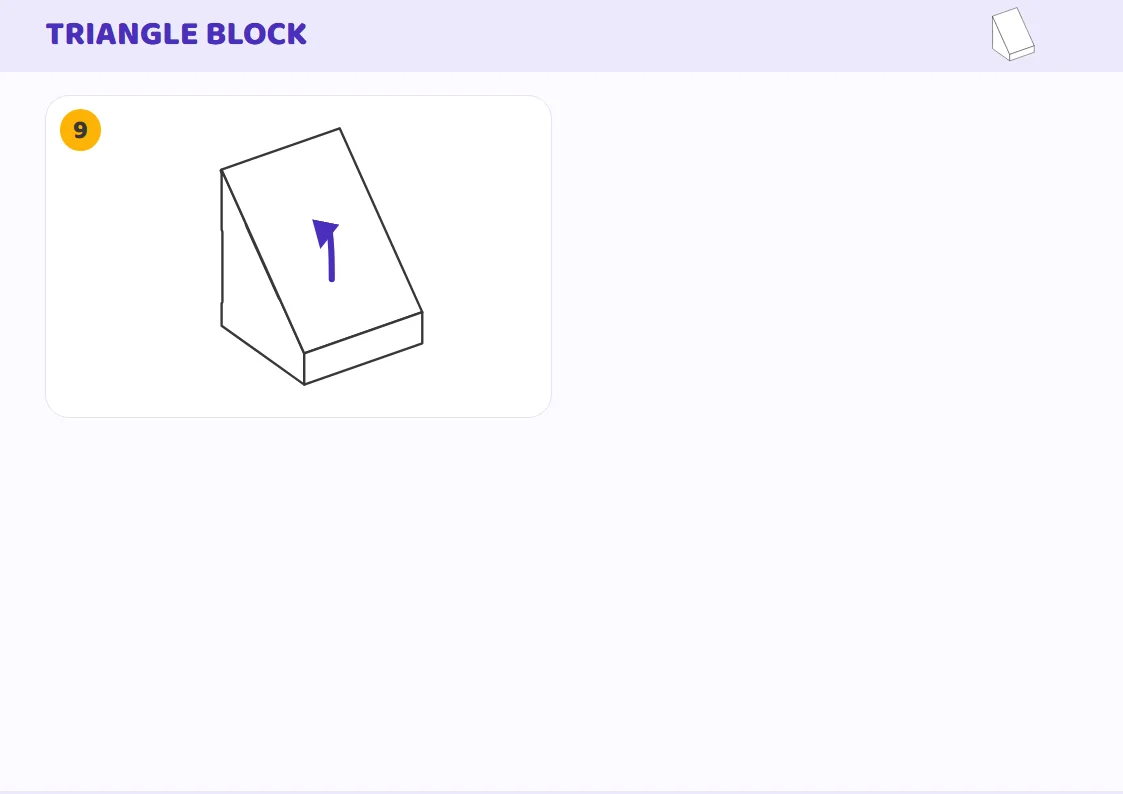
Lay the sheet flat, raise the sides, wrap each flap round the next wall and push its tab through the slot. Flip it over and the block is done. The triangle folds its strips inward first.
Single block, 14 steps
Double block, 14 steps
Triangle, 9 steps
Build longer
How blocks join
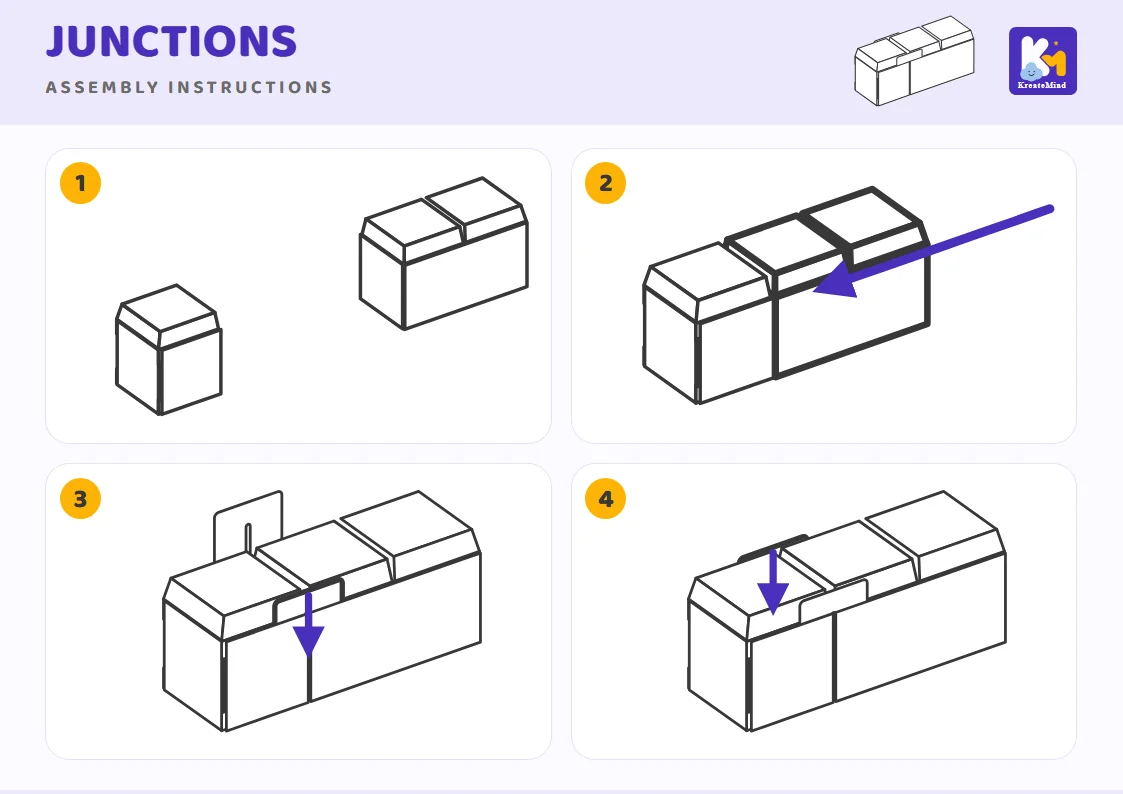
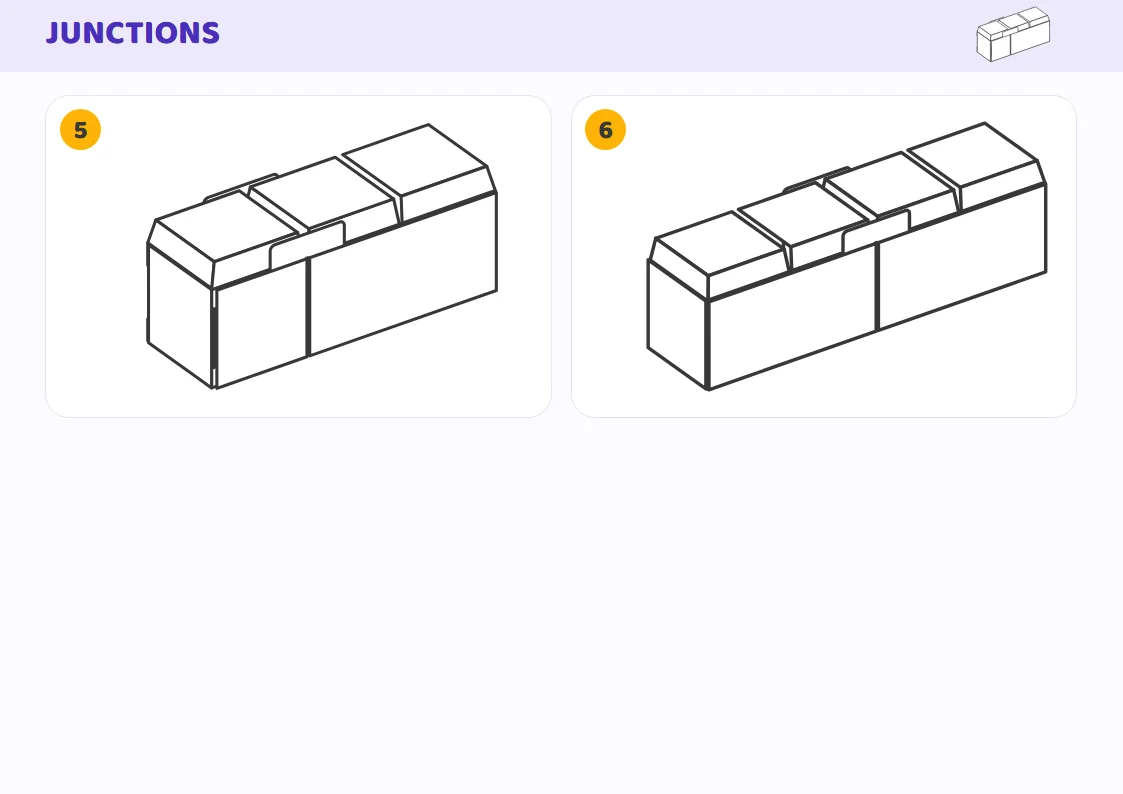
Stand two blocks end to end and drop a junction plate into the channel between the studs, one at the front of the seam and one at the back. A single and a double make a 1×3, two doubles make a 1×4, and long pieces make the strongest walls and window frames. Lift the plates out and the blocks come apart again.
In the box
Assembly instructions
The same leaflet that comes in the box: four steps a page, pictures, numbers and arrows, with a close-up at each tricky moment. The only words are the headings, so it reads the same in any language.
1×1 block
1×2 block
Triangle block
Junctions
Material
Strong board, soft edges
3-ply E-flute corrugated board, about 1.7 mm thick, made in India. No sharp edges, no small parts, no batteries. The studs and tabs are part of the same sheet, so there is nothing to lose and nothing to glue.
- Load per block About 10 kg
- Use Made for building, not for standing or climbing on
- Storage Stack the blocks against a wall, ready for the next build